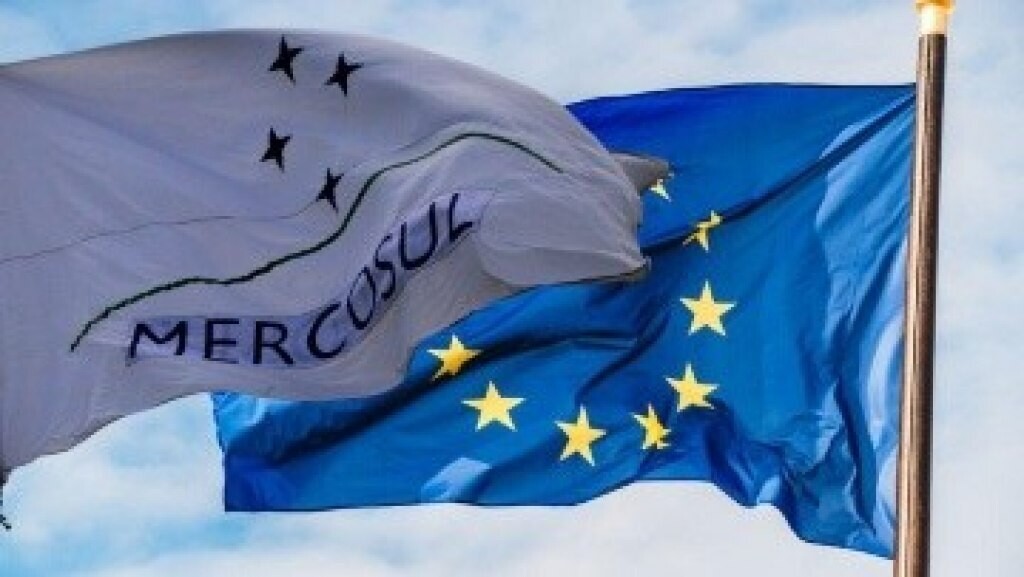
Buenos Aires. The commercial agreement between Mercosur and the European Union, approved yesterday by the Chamber of Deputies, was signed on January 17th in Asunción. The ceremony was attended by the presidents of Argentina, Javier Milei; Paraguay, Santiago Peña; and Uruguay, Yamandú Orsi, while the president of Brazil, Lula da Silva, was absent.
The trade treaty, one of the largest bi-regional agreements in the world, cannot yet be implemented. The European Parliament decided by a majority vote to have the Court of Justice of the European Union review its impact and decide on its enforcement. According to the Argentine News Agency, this process could take months, or even up to two years. However, there is also a version that the European Commission could provisionally apply the trade agreement until it is validated or rejected by the Court of Justice.
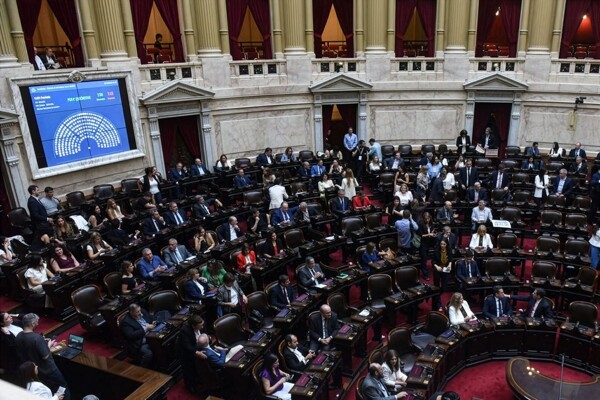
In the vote in the Chamber of Deputies, with Peronism divided in its vote and the help of allies, the officialist bloc approved the bill with a half-sanction, which is now ready to be dealt with in the Senate. To approve the half-sanction of the initiative, which consists of 5,000 pages translated into several languages, the officialist bloc garnered the striking sum of 203 affirmative votes, against only 42 negative votes and four abstentions.
La Libertad Avanza added the support of PRO, UCR, and Provincias Unidas, among other dialogist blocs, but the surprise is that it also captured 43 votes from Unión por la Patria, including that of the bloc's leader, Germán Martínez. This number surpassed the 38 Peronist votes (La Cámpora, kirchnerism, and graobism) that went against the initiative, while the remaining four abstained.
Key points of the agreement: • The implementation of the trade agreement between the two regional economic blocs would allow tariffs to be lowered on over 90% of Argentine exports and cut access barriers for European industrial goods. • Among other implications, tariffs on chemicals, pharmaceuticals, machinery, clothing, and beverages are eliminated. • The agreement implies the creation of a free trade zone with a market of more than 700 million consumers, representing 20% of world GDP. • The European Union is the second largest trading partner of Mercosur after China and ahead of the United States. • The European Union is one of the main sources of Foreign Direct Investment.